Tiếng Việt
 한국어
 日本語
 中文 (中国)
 العربية

Provides services on dedicated infrastructure in various models, depending on customer needs.




































Promotion news, Technology news
Vietnam’s Electronics Sector Employs 1.9 Million Workers, FDI Hits $38.4B: Why Factories Need Facial Recognition Attendance on GPU Cloud
23
Nov
Vietnam’s electronics industry alone now employs roughly 1.9 million workers across more than 80,000 companies, contributing over 30% of the country’s total export value, according to the chairman of the Vietnam Electronic Industries Association (VEIA), as reported by Vietnam News. Add to that newly registered FDI of about USD 38.4 billion in 2025 — one of the highest levels in years, with 50-60% continuing to flow into processing and manufacturing — and Vietnam’s industrial zones are now running at a workforce scale that demands thousands of check-ins and check-outs across multiple shifts every single day.
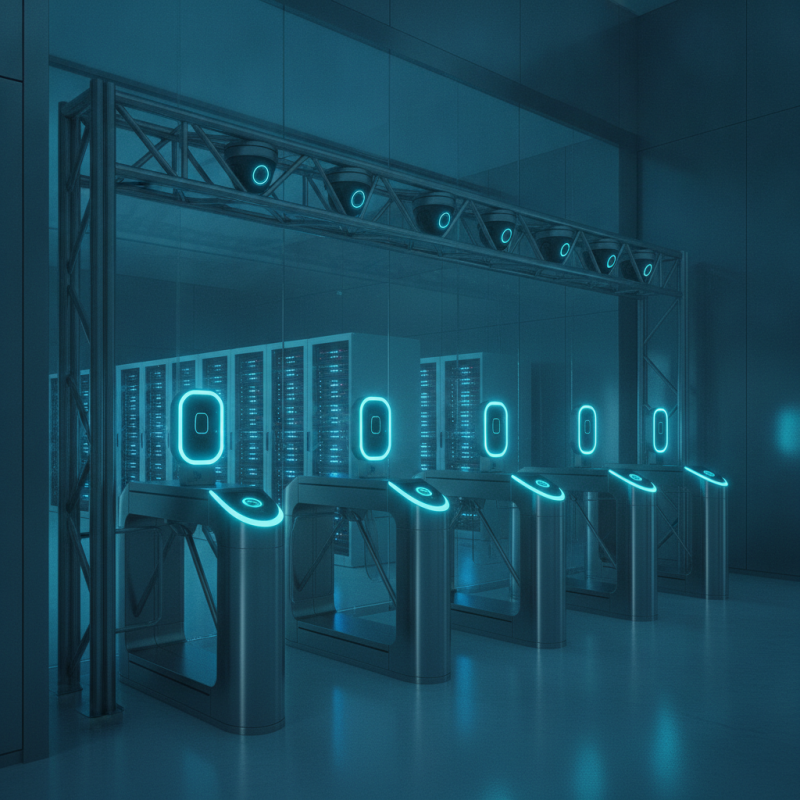
That scale is exposing the limits of traditional time-and-attendance and access-control systems: card and fingerprint readers are easy to game through “buddy punching,” physical contact slows down peak shift-change hours, and monitoring dozens of gates with tens of thousands of daily entries simultaneously is nearly impossible with legacy hardware.
Facial recognition is booming globally — but it needs the right compute behind it
According to MarketsandMarkets, the global facial recognition market is projected to grow from roughly USD 6.3 billion to USD 13.4 billion by 2028, a CAGR of 16.3% — driven largely by enterprise security, access control, and large-scale workforce management needs in manufacturing economies like Vietnam.
The challenge: real-time facial recognition for tens of thousands of daily entries, across multiple gates and camera feeds simultaneously, with high accuracy and anti-spoofing (“liveness detection”) to block photo or video-based fraud, requires substantial parallel processing power — something standard CPU-based servers struggle to deliver as a factory or multi-site operation scales up.
Why manufacturers should run facial attendance systems on GPU Cloud
This is exactly the problem Viettel Cloud GPU is built to solve. With flagship GPU lines like the NVIDIA L40S (48GB) and H200 (141GB), manufacturers can:
- Process multiple camera streams in parallel: real-time face matching at every gate, across every shift, without bottlenecks during peak entry times.
- Stop “buddy punching” fraud: built-in liveness detection catches photo and video spoofing attempts that fingerprint and card systems simply cannot.
- Scale flexibly with factory size: scale GPU configurations (1/2/4/6/8 cards) up or down as camera count and headcount change, without a large upfront investment in physical servers.
- Share infrastructure via vGPU virtualization: run attendance, security monitoring, and productivity analytics AI workloads on shared GPU infrastructure to optimize long-term operating costs.
Viettel Cloud GPU instances come pre-installed with the OS, NVIDIA drivers, and CUDA Toolkit, and fully support popular AI/ML frameworks (TensorFlow, PyTorch) — letting factory IT teams deploy facial recognition models quickly instead of building infrastructure from scratch. Teams deciding on the right configuration can also check this comparison of T4, A30, L40S, and H200 Cloud GPU options to match camera count and daily traffic volume.
Beyond attendance — security and operations on the same infrastructure
The same GPU infrastructure can extend to other factory AI use cases: access control for sensitive areas (server rooms, high-value warehouses), AI-powered security cameras that flag unusual behavior, or computer-vision quality inspection on the production line — as explored in our earlier piece on GPU Cloud for computer-vision defect detection. Consolidating multiple AI workloads on one GPU Cloud platform typically lowers total infrastructure cost compared to standalone systems for each use case.
For India-headquartered manufacturers and IT outsourcing firms running Global Capability Centers (GCCs) or EMS/electronics plants in Vietnam, this matters for a specific reason: workforce security and identity infrastructure is increasingly part of enterprise due-diligence and compliance reviews, and teams that self-assess technical specs rather than relying on intermediaries will want GPU options (T4, A30, L40S, H200) and benchmarks spelled out clearly before committing — not pricing tables buried behind a sales call.
Facial data is sensitive data — infrastructure needs to meet international standards
Biometric facial data for thousands of workers is sensitive personal information, which means storage and processing infrastructure needs to meet strict security standards. This is especially true for FDI-backed factories. Viettel IDC operates a network of 9 data centers certified to ANSI/TIA-942-B:2017 Rated 3 — the highest standard in Vietnam — along with ISO 27001:2022, ISO 27017, and ISO 27018:2019 certifications (personal data protection in the cloud) and an availability SLA of up to 99.99%. For foreign-invested factories, these certifications are also a key part of digital infrastructure due diligence, as covered in our 6-point digital infrastructure checklist for foreign investors.
Bottom line
As Vietnam’s manufacturing and electronics workforce keeps growing alongside FDI inflows, manual time-and-attendance and access-control systems will increasingly show their limits in speed, operating cost, and fraud risk. Moving to real-time facial recognition on GPU Cloud not only solves the large-scale workforce problem — it opens the door to running multiple AI workloads on the same infrastructure, with costs scaled to actual need rather than locked into a fixed upfront server investment.
References:
- Vietnam News — Workforce and company figures for Vietnam’s electronics industry.
- The Investor — 2025 newly registered FDI figures and share flowing into manufacturing.
- MarketsandMarkets — Global facial recognition market size and growth rate.
For a detailed quote and tailored solution advice, please contact our Sales team via Hotline/Zalo/WhatsApp: 0966707701 or Email: dungnh1@viettelidc.com.vn