
 Tiếng Việt
 한국어
 日本語
 中文 (中国)
 العربية

Provides services on dedicated infrastructure in various models, depending on customer needs.


Promotion news, Technology news
AI Logistics Market Heading to $196 Billion by 2034: Which GPU Cloud Helps Vietnamese Warehouses Match Viettel Post’s Productivity?
22
Nov
Nov
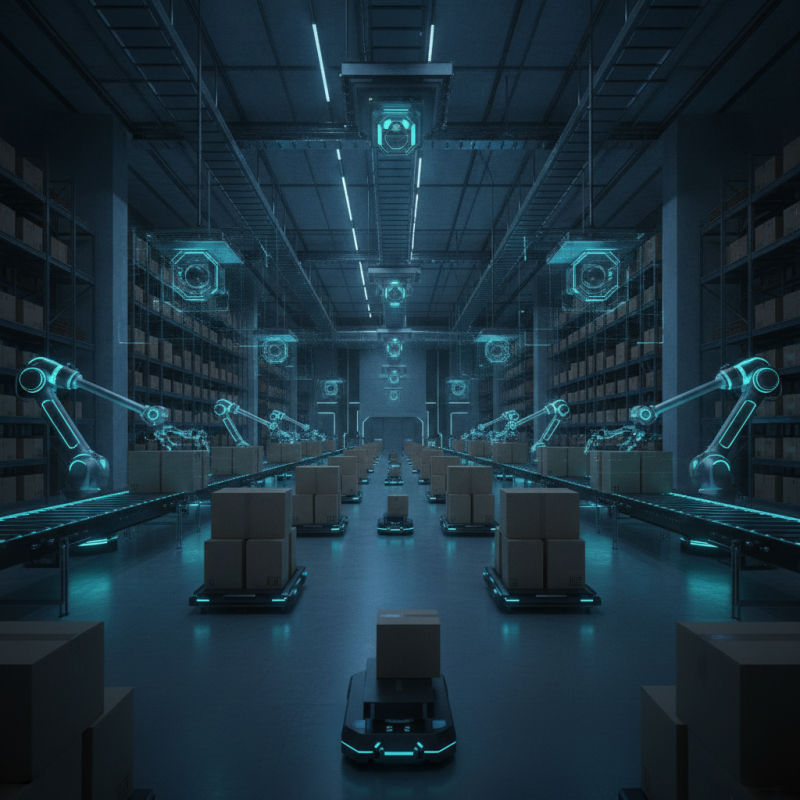
The year-end shopping rush and Lunar New Year (Tet) season are approaching fast, putting mounting pressure on Vietnam’s entire logistics chain — from central warehouses to last-mile delivery. Against this backdrop, Computer Vision is becoming the key technology that lets warehouses automate sorting, inspection, and handling at scale, replacing manual labor that is increasingly hard to hire and hard to scale up and down with demand.
Global AI logistics market booms, but Vietnam’s delivery productivity still lags
According to market analysis from Global Market Insights, the AI in logistics and supply chain market has already surpassed $20.1 billion and is forecast to exceed $196.58 billion by 2034, with the AI software segment alone growing at a CAGR of roughly 26%. It is one of the fastest-growing technology segments today.
Yet in Vietnam, delivery productivity still lags far behind regional peers: figures cited by VnEconomy show a shipper in China can handle roughly 1,000–1,500 deliveries a day, compared with only about 80–100 a day in Vietnam — a gap driven in part by the lack of automation in sorting, packing, and central warehouse operations.
Viettel Post’s transformation: from 600 staff to a robot-run operation
A notable domestic example: Viettel Post’s automated fulfillment center now runs more than 200 robots, processing roughly 1.5 million orders a day — a volume the company says could not be handled with manual labor alone. According to figures reported by VnEconomy, staffing needs at this center fell from around 600 people to an almost fully automated operation, while productivity rose roughly 5x. It shows that warehouse automation is no longer a distant future for Vietnam’s logistics sector — it is already happening at major domestic players, and is set to become a competitive baseline for small and mid-sized logistics firms as well.
Computer Vision: the “eyes” behind every automated warehouse task
Behind every sorting robot and automated conveyor belt sits a layer of Computer Vision handling a range of real-time tasks:
- Reading and classifying waybill codes and QR codes, and recognizing vehicle license plates entering or leaving the warehouse;
- Detecting damaged goods or incorrect packaging before shipment;
- Automated inventory counting via camera instead of manual stocktaking;
- Guiding picking robots precisely based on object shape and position;
- Monitoring workplace safety and detecting collision risks between staff and material-handling equipment.
A study by MIT in partnership with Mecalux (published in late 2025, surveying more than 2,000 supply chain professionals across 21 countries) found that 92% of companies are implementing or planning AI projects in warehousing, 87% expect to increase their AI budgets further, with 11–30% of warehouse technology budgets allocated to AI/machine learning and a typical payback period of just 2–3 years. It’s a clear signal that investment in Computer Vision for warehousing is shifting from “pilot” to “mandatory” to stay competitive — especially during peak seasons like Tet or year-end sales, when order volumes can spike several times over normal days.
Why logistics companies in Vietnam should rent GPU Cloud instead of building their own infrastructure
Running Computer Vision for warehousing at real-world scale — dozens or hundreds of cameras running 24/7, processing real-time video to sort and inspect goods — requires substantial GPU computing power, especially during peak periods when order volumes spike and then taper off after the season. It’s the same challenge many Vietnamese manufacturing and retail businesses are already facing, as Viettel IDC previously covered in its article on AI defect detection with Computer Vision for manufacturing and its piece on GPU Cloud for retail security surveillance.
Instead of sinking capital into physical GPU rigs — which depreciate fast and are hard to scale flexibly with seasonal demand — logistics companies can rent Viettel Cloud GPU, offering NVIDIA A30 (24GB), L40S (48GB), and H200 (141GB) cards, pre-installed with OS, drivers, and CUDA Toolkit, with full support for popular AI/ML frameworks such as TensorFlow and PyTorch. Companies can start small with A30 for pilot sorting-model testing, then scale up to L40S or H200 once rolling out across multiple cameras and warehouses during peak season — see our detailed comparison of GPU T4, A30, L40S, and H200 to choose the right configuration for your logistics AI workload. Viettel IDC also offers a proof-of-concept (POC) trial of up to 7 days, letting businesses validate real-world performance before committing, reducing the risk of over- or under-provisioning.
This is also relevant for Indian Global Capability Centers (GCCs) and IT outsourcing teams building or maintaining computer-vision and logistics-AI systems for clients operating in Vietnam: Viettel Cloud GPU runs on data centers certified to the ANSI/TIA-942-B Rated 3 standard and ISO 27001/27017 information-security certifications, with GPU specs (VRAM, driver stack, framework support) that engineering teams can benchmark directly rather than relying on policy-level assurances alone — a point that typically matters more to technical decision-makers evaluating infrastructure for offshore development or GCC workloads.
The entire infrastructure runs on a data center system certified to ANSI/TIA-942-B Rated 3 — the highest and most advanced standard in Vietnam — along with ISO 27001 and ISO 27017 information-security certifications, ensuring that waybill data, product imagery, and customer information for logistics businesses are strictly protected, backed by an SLA commitment of up to 99.99% service availability — a critical factor when automated sorting systems must run continuously through peak season.
References
- Global Market Insights, via SDCExec — Forecast for the AI in Logistics & Supply Chain market through 2034
- VnEconomy — Case study on Viettel Post’s warehouse automation and Vietnam-China shipper productivity benchmark
- MIT & Mecalux — Study on global AI adoption in warehousing (2025)
To get a detailed quote and consultation on the right Viettel Cloud GPU solution for your warehouse scale, please contact our Sales team via Hotline/Zalo/WhatsApp: 0966707701 or Email: dungnh1@viettelidc.com.vn


