
 Tiếng Việt
 한국어
 日本語
 中文 (中国)
 العربية

Provides services on dedicated infrastructure in various models, depending on customer needs.


Promotion news, Technology news
AI Defect Detection Reaches 95% Accuracy: Why Vietnamese Manufacturers Need GPU Cloud for Computer Vision Now
13
Nov
Nov
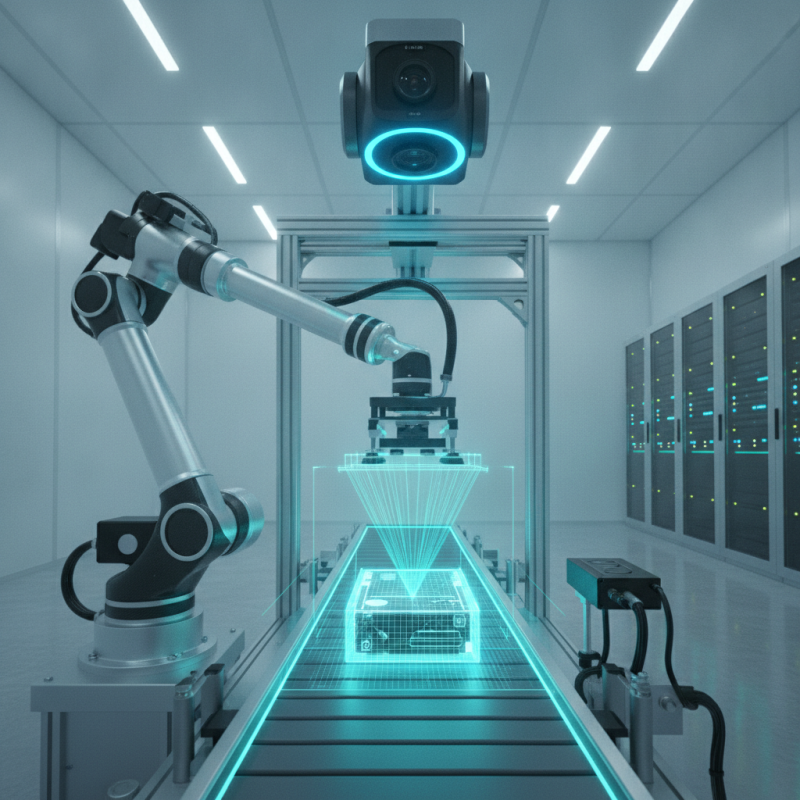
A factory operator in Taiwan just demonstrated something many Vietnamese manufacturers still doubt: computer vision AI can cut product defect rates by 67% and lift defect-analysis accuracy from 76% to nearly 95% — all running on GPU infrastructure, with no human standing at the line inspecting every unit. This is no longer a lab experiment. It mirrors a clear global shift in AI infrastructure spending, and Vietnam’s manufacturing sector — electronics, textiles, food processing — now has a real chance to catch up without buying a single GPU server.
The World Is Now Spending More on AI Inference Than Training
According to the latest forecast from Gartner, worldwide spending on AI-optimized IaaS is projected to grow roughly 96% in 2026, surpassing $42 billion. The most telling detail: for the first time, spending on inference — AI actually running in production, such as real-time defect-image analysis — is overtaking spending on model training, accounting for about 55% of AI-optimized IaaS spend this year and rising to 59% by 2027.
What does this mean for a factory floor? Unlike training (usually done once, in batches), computer-vision inference for quality control must run continuously, 24/7, in real time across every line camera. This is exactly the problem GPU cloud infrastructure was built to solve — manufacturers don’t need to own GPUs outright, they rent exactly the capacity needed for continuous inference.
Real-World Case Study: Computer Vision AI Cuts Defect Rates by 67%
In a customer story published by NVIDIA, electronics manufacturer Pegatron deployed visual AI agents (a Visual Analytics Agent and an Assembly Guiding Agent) to monitor assembly-line video in real time, combined with a vision-language model (VLM) for defect analysis. The results: a 67% reduction in defect rates, defect-analysis accuracy at one member unit rising from 76% to nearly 95%, a 67% cut in AI inspection model deployment time, and a 7% reduction in labor cost per assembly line. All of this inference infrastructure runs on GPUs — proof that the real bottleneck isn’t whether a company has an AI model, but whether it has enough GPU capacity to run that model continuously, reliably, and affordably.
Why Vietnamese Manufacturers Should Start on GPU Cloud, Not Dedicated Servers
For most factories in Vietnam — especially SMEs in the electronics, textile, and food supply chains — buying a physical GPU cluster to run AI quality inspection means heavy upfront capital, fast technology obsolescence risk, and a shortage of in-house specialists to operate it. Viettel Cloud GPU is built to solve exactly this:
- GPU configurations for every need: from the A30 (24GB) for moderate, cost-efficient workloads, to the L40S (48GB) and H200 (141GB) — our newest flagship tiers, powerful enough to run multiple high-resolution camera feeds and computer-vision models simultaneously.
- The full AI stack pre-installed: OS, NVIDIA Driver, CUDA Toolkit, with full support for TensorFlow and PyTorch — no need to build the environment from scratch; your computer-vision model can go live immediately.
- vGPU virtualization technology: flexibly shares GPU resources across multiple quality-inspection applications, big-data camera analytics, and other AI-ML workloads on the same infrastructure.
- Internationally certified infrastructure: built on data centers rated ANSI/TIA-942-B Rated 3, certified ISO 27001:2022 and ISO 27017 — meeting the security requirements of production data and international supply chains.
- Up to a 7-day POC trial policy: so manufacturers can validate a real computer-vision model on their own line before committing to full-scale deployment.
Storing Millions of Inspection Frames — a Problem You Can’t Ignore
A 24/7 computer-vision monitoring system generates enormous volumes of image and video data that must be stored for traceability, quality audits, and future model retraining. This is why more factories are turning to unlimited Object Storage solutions to retain unstructured data long-term without capacity limits or disruption when scaling up.
Choosing the Right GPU for Your Quality-Control Workload
Not every factory needs an H200 from day one. For lightweight, batch-processed computer-vision models, the A30 remains a sound, cost-efficient choice; for multi-camera, high-resolution, real-time monitoring systems, the L40S or H200 is the better fit. See our detailed comparison of T4, A30, L40S, and H200 GPU Cloud tiers to pick the right configuration for your AI workload.
References
- Gartner – Gartner Forecasts Worldwide AI-Optimized IaaS Spending to Grow 96% in 2026
- NVIDIA Customer Stories – Pegatron Scales Factory Operations With Visual AI and Digital Twins
To get a detailed quote and tailored solution advice, please contact our Sales team via Hotline/Zalo/WhatsApp: 0966707701 or Email: dungnh1@viettelidc.com.vn


