Tiếng Việt
 한국어
 日本語
 中文 (中国)
 العربية

Provides services on dedicated infrastructure in various models, depending on customer needs.



































Promotion news, Technology news
The PostgreSQL vs MySQL Race and the “Mixed Database Fleet” Problem: Why Vietnamese Enterprises Need Database-as-a-Service Now
11
Nov
Nov
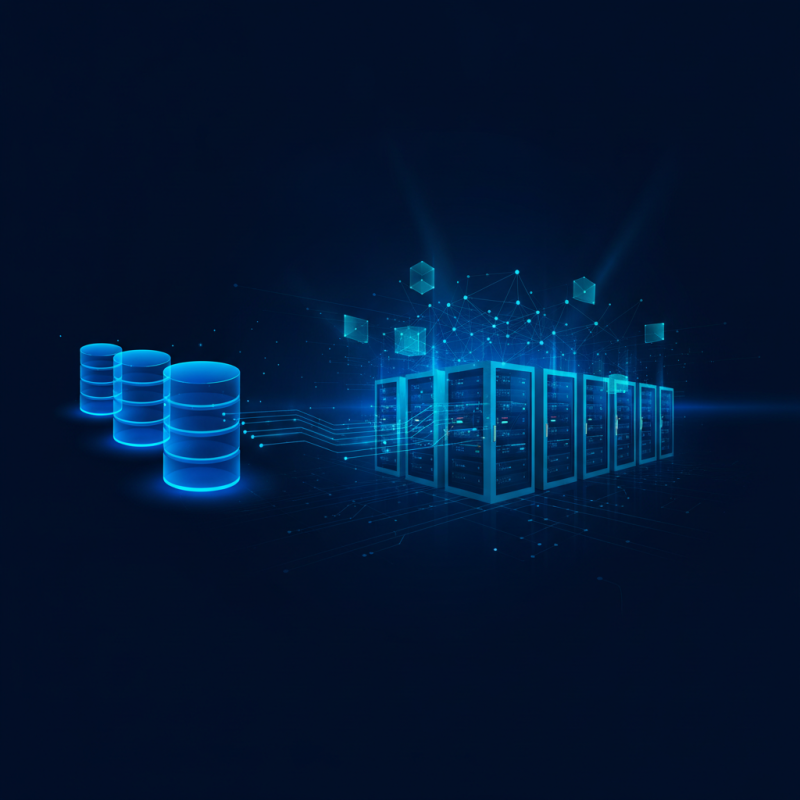
The PostgreSQL – MySQL race and the “mixed database fleet” challenge facing enterprises
According to the 2025 Stack Overflow Developer Survey, PostgreSQL usage among developers climbed to 55.6% (up from 48.7% the previous year), overtaking MySQL at 40.5%. Yet PostgreSQL isn’t “killing” MySQL – in fact, most large enterprises worldwide now run both engines side by side. PostgreSQL is typically chosen for new SaaS products and internal platforms that need flexible data models, while MySQL remains the backbone for high-volume transactional systems that have run reliably for years and are too risky to replace.
As a result, organizations end up managing a “mixed database fleet” – MySQL and PostgreSQL together, sometimes alongside SQL Server as well. The biggest challenge isn’t technology consolidation, but keeping operational standards – availability, backup, upgrades, monitoring – consistent across different engines. Without a shared set of standards, operational complexity quietly builds up over time, driving up DBA staffing costs and operational risk.
Global trend: fully automated Database-as-a-Service takes the lead
In response to this challenge, the technology industry is shifting strongly toward fully automated Database-as-a-Service (DBaaS). A clear example is Broadcom/VMware’s recent announcement of VMware Data Services Manager (DSM) 9.1 – a DBaaS platform running on VMware Cloud Foundation (VCF) 9 that supports PostgreSQL, MySQL, and SQL Server simultaneously within a single management toolset. According to operational figures published by VMware, the platform cuts the time to provision a new database instance to under 15 minutes, achieves a patching success rate of 99.5%, and supports failover for high-availability clusters in under 30 seconds.
Another notable point is that DSM 9.1 comes with built-in pgvector support for PostgreSQL, enabling storage and querying of vector embeddings directly inside the database – the technical foundation for private AI applications such as RAG (Retrieval-Augmented Generation) and semantic search. This shows that the modern database is no longer simply a place to store transactional data, but is becoming part of the enterprise AI stack.
Viettel Database Service (DBS): bringing this global trend closer to Vietnamese enterprises
Keeping pace with this technology trend, Viettel IDC has developed Viettel Database Service (DBS) – a Database-as-a-Service offering built on VMware Cloud Foundation (VCF 9) and managed through Database Service Manager (DSM) for centralized administration of both MySQL and PostgreSQL. Thanks to its status as a Pinnacle Partner of Broadcom – the highest partner tier Broadcom grants to a service provider in Vietnam and the region – Viettel IDC ensures it can deploy and operate VMware/VCF technology to the highest standard, rather than relying on ordinary virtualization infrastructure alone.
With Viettel DBS, enterprises can:
- Spin up a new database instance quickly, without waiting for an infrastructure team to provision servers and manually tune configuration parameters;
- Automatically scale resources (CPU, RAM, storage) as traffic grows, without planned downtime;
- Automatically back up and restore data according to policy, with point-in-time recovery support;
- Run with high availability, monitored and automated by Viettel IDC’s dedicated operations team;
- Centrally manage multiple MySQL/PostgreSQL instances from a single control panel, significantly reducing the load on in-house DBA teams.
Traditional self-managed databases vs. Viettel Database Service
| Criteria | Traditional self-built & self-managed database | Viettel Database Service (DBS) |
|---|---|---|
| Time to provision a new instance | Days to weeks (procurement, installation, configuration) | Automated, significantly shorter deployment time |
| Patching & version upgrades | Manual, prone to unplanned downtime | Policy-driven automation, reduced disruption risk |
| Scaling under increased load | Requires advance planning, often needs downtime | Flexible, scales to actual demand |
| Backup & recovery | Manual process, dependent on staff experience | Automated, with point-in-time recovery |
| Operations team | Requires dedicated 24/7 DBAs | Reduced operational load, freeing resources for application development |
| Data sovereignty | Depends on where it’s hosted | Data stored in data centers in Vietnam |
Real-world applications by industry
For banking, finance, and securities firms, Viettel DBS helps ensure transactional data is stored domestically, meeting data sovereignty requirements, while still benefiting from high availability and fast recovery in the event of an incident. For retail and e-commerce businesses, the ability to automatically scale resources is essential during peak periods such as Tet, 11.11, or major promotional campaigns, when database query volume can multiply within a short time. For startups and SaaS companies, Viettel DBS lets technical teams focus on building their core product instead of operating database infrastructure, while being able to start small and scale gradually as the product grows.
Conclusion
The trend toward automated Database-as-a-Service, demonstrated by the advances in VMware Data Services Manager on the VCF 9 platform, is reshaping how enterprises manage data worldwide. With Viettel Database Service, built on that very technology platform and operated by Broadcom’s Pinnacle Partner in Vietnam, Vietnamese businesses can now access leading global technology trends on internationally certified infrastructure, with data stored domestically.
To get a consultation on the Database Service solution that fits your organization’s systems, please contact our Sales team via Hotline/Zalo/WhatsApp: 0966707701 or Email: dungnh1@viettelidc.com.vn